
Close-Up Magic vs Stage Magic: Which is Right for Your Event?
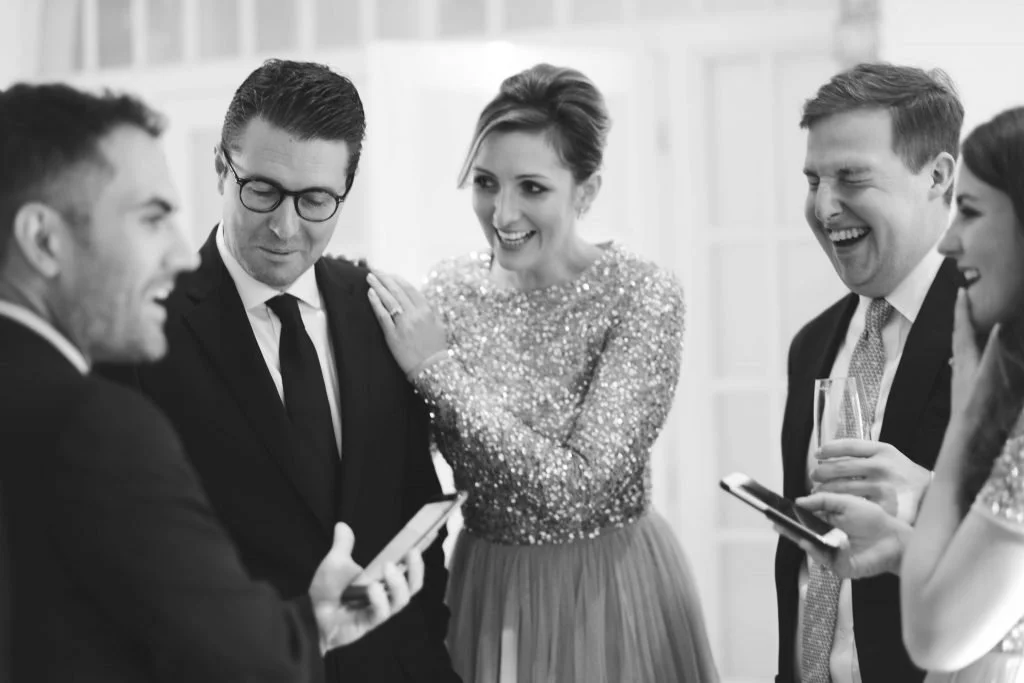
A close-up magician performing intimate tech magic for a small group of corporate event guests, capturing the immediate delight and astonishment that defines the mix and mingle format.
When people think of a magician, they often picture a stage performer in front of a large audience — a grand illusion, a dramatic reveal, a theatrical spectacle. But for many corporate events, and indeed for most weddings and private occasions, close-up magic — performed inches away from your guests, in their hands, with no stage between performer and audience — delivers a far more powerful and personally affecting experience. Understanding the difference between the two formats, and knowing which one is right for your specific event, is the key to making the best booking decision.
What is close-up magic?
Close-up magic — sometimes called table magic, walkabout magic, or mix and mingle magic — takes place in the hands. Literally. The magician moves through your guests in small groups, performing with cards, coins, borrowed objects, and other everyday items at close quarters. Every person in the group gets a front-row seat. The reactions are immediate, intimate, and genuinely astonishing precisely because there is nowhere to hide — the magic happens inches from people's faces, with their own hands sometimes serving as the stage.
This intimacy is both the defining characteristic and the greatest strength of close-up magic. The experience of watching something impossible happen right in front of your eyes — close enough to touch, with no obvious mechanism, no distance between you and the performer — is fundamentally different from watching a stage show. It is personal in a way that theatre rarely is, and the emotional impact reflects that.
Close-up magic works beautifully at drinks receptions, networking events, gala dinners, trade show stands, and wedding drinks receptions — anywhere guests are moving freely and you want to create a warm, engaging, memorable atmosphere without disrupting the natural flow of the occasion. There are no microphones, no PA systems, no stage to set up, and no need for the room to stop what it's doing. The magic simply happens, in the middle of ordinary life, and leaves people wondering whether ordinary life is quite what they thought it was.
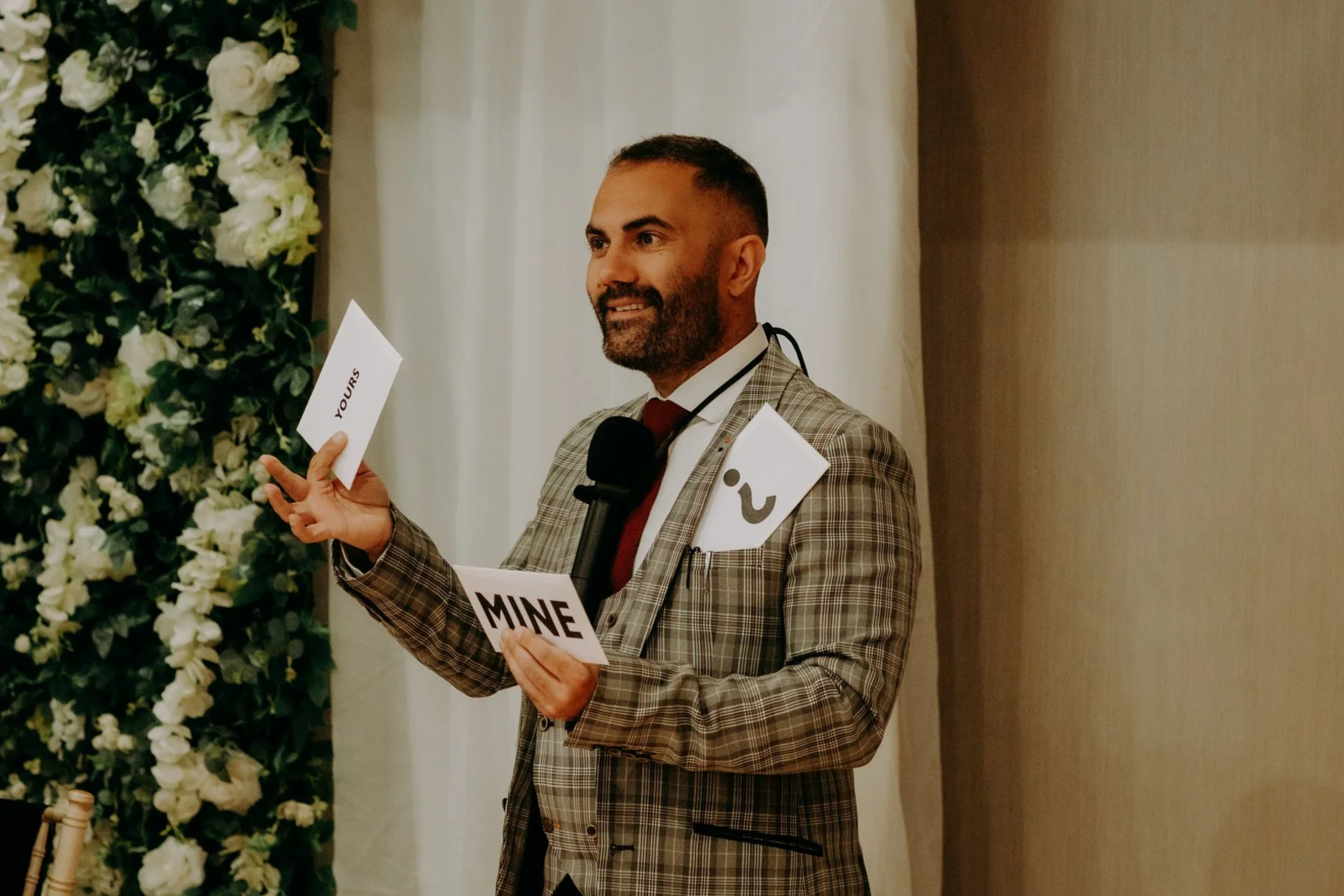
A professional cabaret magician commanding the stage during a corporate awards dinner, delivering a polished theatrical performance to a captivated seated audience.
What is stage magic?
Stage magic — also known as cabaret magic — is a seated, theatrical performance delivered to the whole room at once. It is built around the same fundamental principles as close-up magic, but scaled up for a larger audience and structured as a narrative performance with a beginning, middle, and end. A well-crafted cabaret set builds tension, develops character, generates laughter, and delivers a series of astonishing moments that culminate in a finale designed to leave the whole room speechless.
Stage magic is inherently theatrical — it uses the conventions of performance, including timing, misdirection, audience participation, and dramatic build, in a way that close-up work does not need to. The best stage magicians are as much storytellers and comedians as they are technicians, and the experience of watching a great cabaret set is closer to watching a one-person show than a series of tricks.
This format suits awards evenings, conferences, after-dinner entertainment, and any event with a structured programme where a headline entertainment moment is needed. It is designed to be watched by everyone at once, to create a shared experience across the whole room, and to fill a clearly defined slot in the event schedule.
The key differences in practice
The most practical difference between the two formats is in how they fit into your event. Close-up magic is ambient — it flows around the event without requiring anything to stop. Stage magic requires a moment of transition: the room comes to attention, the performance begins, and the audience becomes an audience rather than a collection of individuals going about their evening.
This distinction has significant implications for the type of event you're planning. For a drinks reception or networking event where guests are mingling freely, close-up magic is almost always the better choice — it meets people where they are rather than asking them to become a formal audience. For an after-dinner entertainment slot at an awards ceremony or corporate dinner, a stage performance provides the kind of shared, theatrical climax to the evening that close-up work, however brilliant, cannot replicate for a large seated room.
The size of the audience is also relevant. Close-up magic works best for groups of up to around one hundred and fifty guests — at larger events, it becomes physically impossible for a single performer to reach everyone meaningfully across the duration of the occasion. Stage magic scales to any audience size, from an intimate dinner of twenty to a ballroom of five hundred.
Which format is right for your event?
The honest answer is that many events benefit from both. A corporate magician working the room during a drinks reception — performing extraordinary close-up magic for small groups as guests arrive and mingle — followed by a short cabaret spot after dinner gives your guests two distinct, complementary, and genuinely memorable experiences across the same evening.
The close-up work during the reception warms the room, breaks the ice, and creates the kind of individual moments that people carry away as personal memories. The stage performance after dinner creates the shared, theatrical experience that unites the whole room and provides the event with a genuine climax. Together, they cover every phase of the evening and every type of guest — those who love being up close, those who prefer to watch from a distance, and everyone in between.
The key questions to ask yourself
Is your audience moving freely, or will they be seated for a significant part of the evening? Do you have a dedicated performance slot in the programme, or do you want entertainment woven continuously throughout the occasion? How large is your audience, and what is the physical layout of the venue? Is the primary goal to create individual moments of astonishment or a shared theatrical experience for the whole room?
The answers to these questions will point you clearly toward the right format — and a good magician will always advise you honestly based on your brief rather than simply recommending the format that is most convenient for them. If the event calls for close-up work, they'll tell you. If it calls for a stage spot, or for a combination of both, they'll tell you that too.
A note on experience and versatility
Not all magicians are equally skilled in both formats. Close-up magic and stage magic are related disciplines that share fundamental principles, but they require different skills, different performance instincts, and different types of material. A magician who excels at intimate close-up work may not have the stage presence and theatrical instincts required for a compelling cabaret performance — and vice versa.
When booking, ask specifically about the performer's experience in the format you need. Is the magician a Member of the Magic Circle? Watch footage of real performances in that format — not just polished showreel content — and look for the specific qualities that format demands. Warmth, presence, and the ability to read a small group in real time for close-up work; theatrical confidence, comedic timing, and narrative instinct for stage performance.
You can explore both close-up and stage magic formats in more detail on my corporate events page.
Not sure which format is right for your event? Get in touch and we can talk through the options together — I'm always happy to give honest, specific advice before any commitment is made.