
Do You Need a Toastmaster at Your Wedding? (And What They Actually Do)
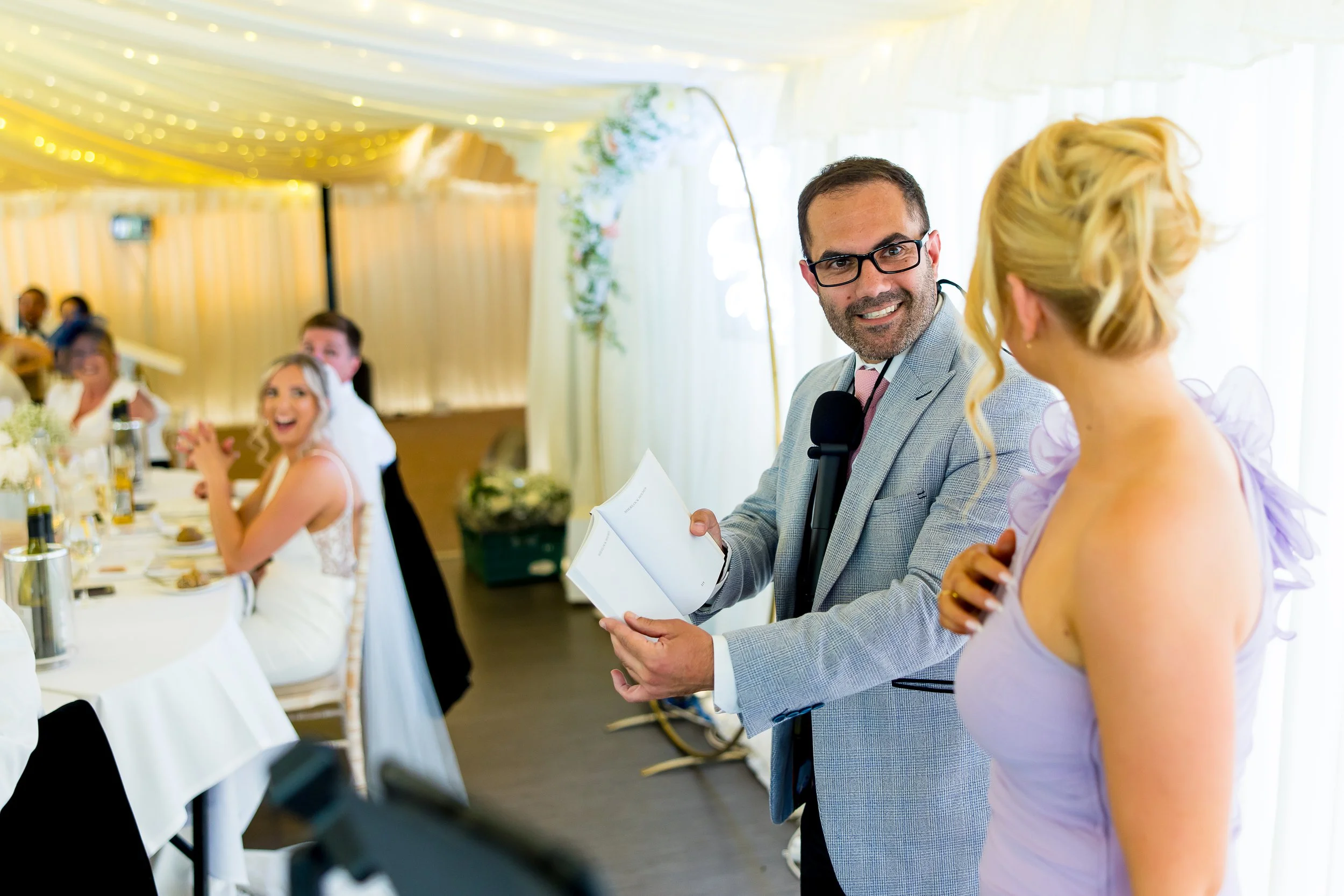
A confident wedding host speaking on the microphone during the wedding breakfast, engaging a guest at the top table while others smile and react, demonstrating calm guidance and seamless coordination throughout the reception. Image courtesy of Andrew Millard Photography.
If you’re currently planning your wedding, you may have asked:
“Do I need a toastmaster?”
It’s a fair question.
Traditionally, a wedding toastmaster was responsible for announcing the couple, introducing speeches and guiding guests through formal moments of the day.
But modern weddings have evolved.
And so has the role of hosting.
Before deciding whether you need a wedding toastmaster in the UK, it helps to understand what they actually do — and what alternatives exist.
What Does a Toastmaster Do at a Wedding?
A traditional wedding toastmaster typically:
• Announces the bride and groom
• Introduces speakers
• Invites guests to take their seats
• Oversees formal proceedings
• Works alongside the venue
They are often dressed in formal red tailcoats and follow a structured, traditional format.
For very formal weddings, this can work beautifully.
Much of this becomes particularly important during the drinks reception, which I break down in detail in what actually happens during a wedding drinks reception.
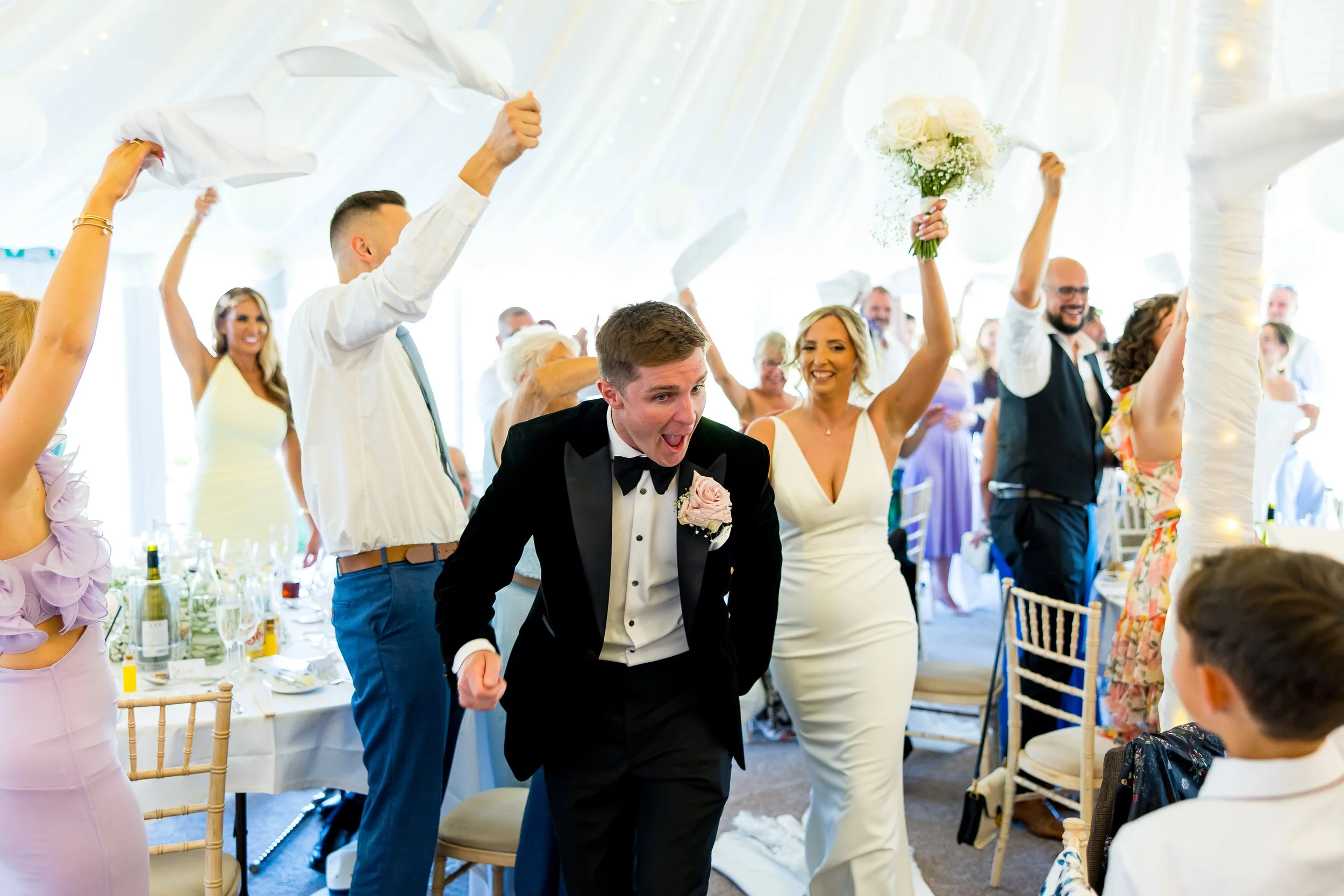
A celebratory wedding breakfast entrance as the bride and groom are introduced, with guests cheering and waving napkins. The moment is lively yet clearly guided, showing structured hosting in action. Image courtesy of Andrew Millard Photography.
When a Traditional Toastmaster Works Well
A toastmaster may suit you if:
• You’re planning a highly formal wedding
• You love traditional ceremony structure
• You want a clearly defined master of ceremonies
• You prefer a classic approach
In these settings, the structure can feel fitting and elegant.
Why Some Modern Couples Hesitate
Many couples today are aiming for something slightly different.
They want:
• Warmth over formality
• Natural flow over rigid structure
• Atmosphere over announcements
• Inclusivity over hierarchy
And sometimes the traditional toastmaster format can feel more formal than the day itself.
You’re right to think about whether it aligns with your vision.
Wedding MC vs Toastmaster – What’s the Difference?
This is where confusion often happens.
A wedding MC (Master of Ceremonies):
• May take a more relaxed tone
• Speaks on the microphone throughout the day
• Coordinates transitions
• Maintains atmosphere
A traditional toastmaster:
• Focuses on formal announcements
• Follows established protocol
• Often operates in a more ceremonial style
Both manage structure.
But the feeling can be different.
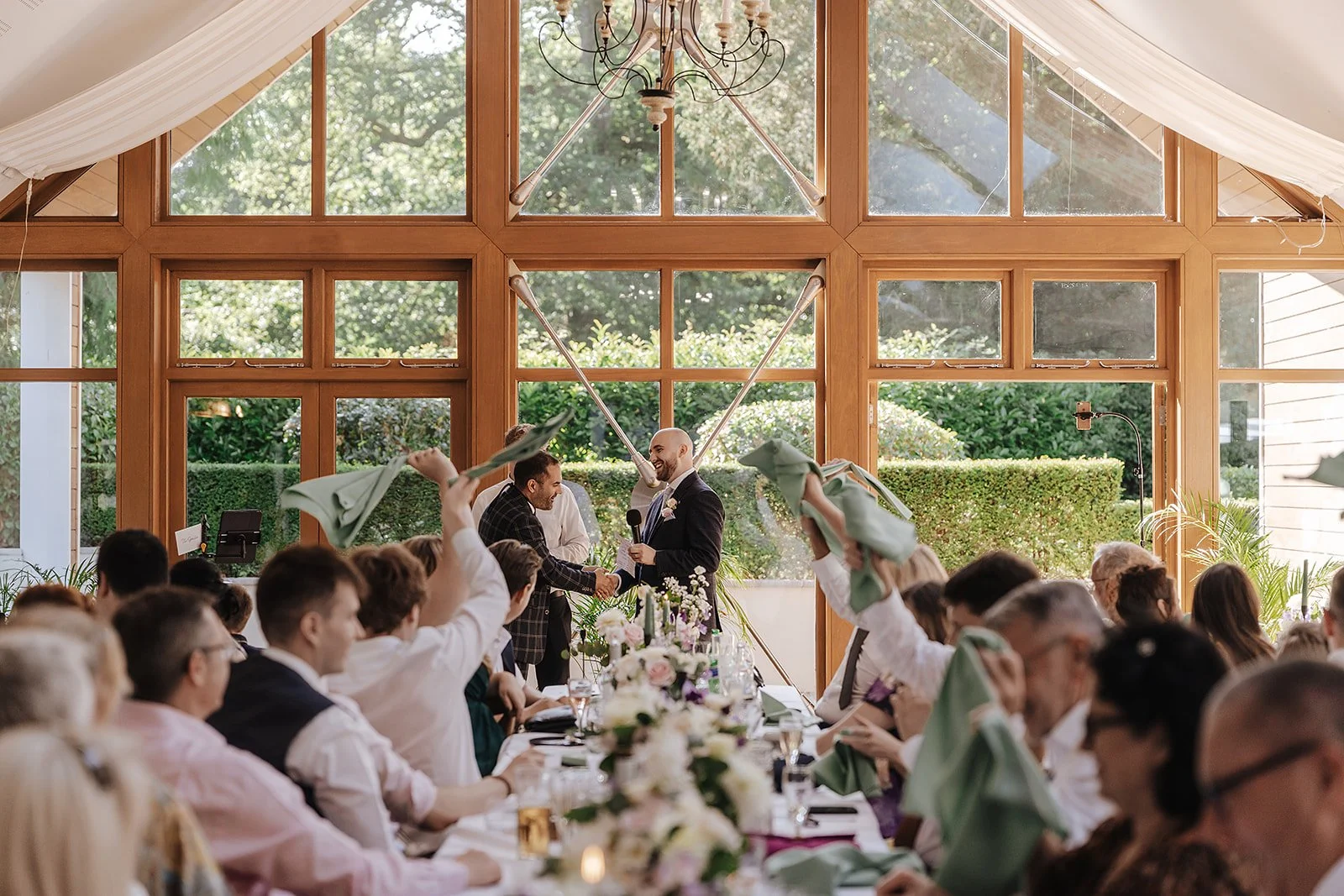
As part of the cabaret magic finale before the speeches, the groom joins in to help complete a final magical moment while guests around the room raise their napkins and laugh in celebration. The scene captures a lively and inclusive atmosphere during the wedding breakfast, with guests fully engaged in the shared experience. Image courtesy of Emine Weddings.
The Rise of the Modern Wedding Host
More couples are now choosing a wedding day host.
This role combines:
• Clear communication
• Subtle coordination
• Energy management
• Engagement during drinks reception
• Smooth transitions into dinner and speeches
Rather than simply announcing moments, a host reads the room.
They ensure guests feel included.
They notice when energy dips.
They keep the timeline moving — without it feeling controlled.
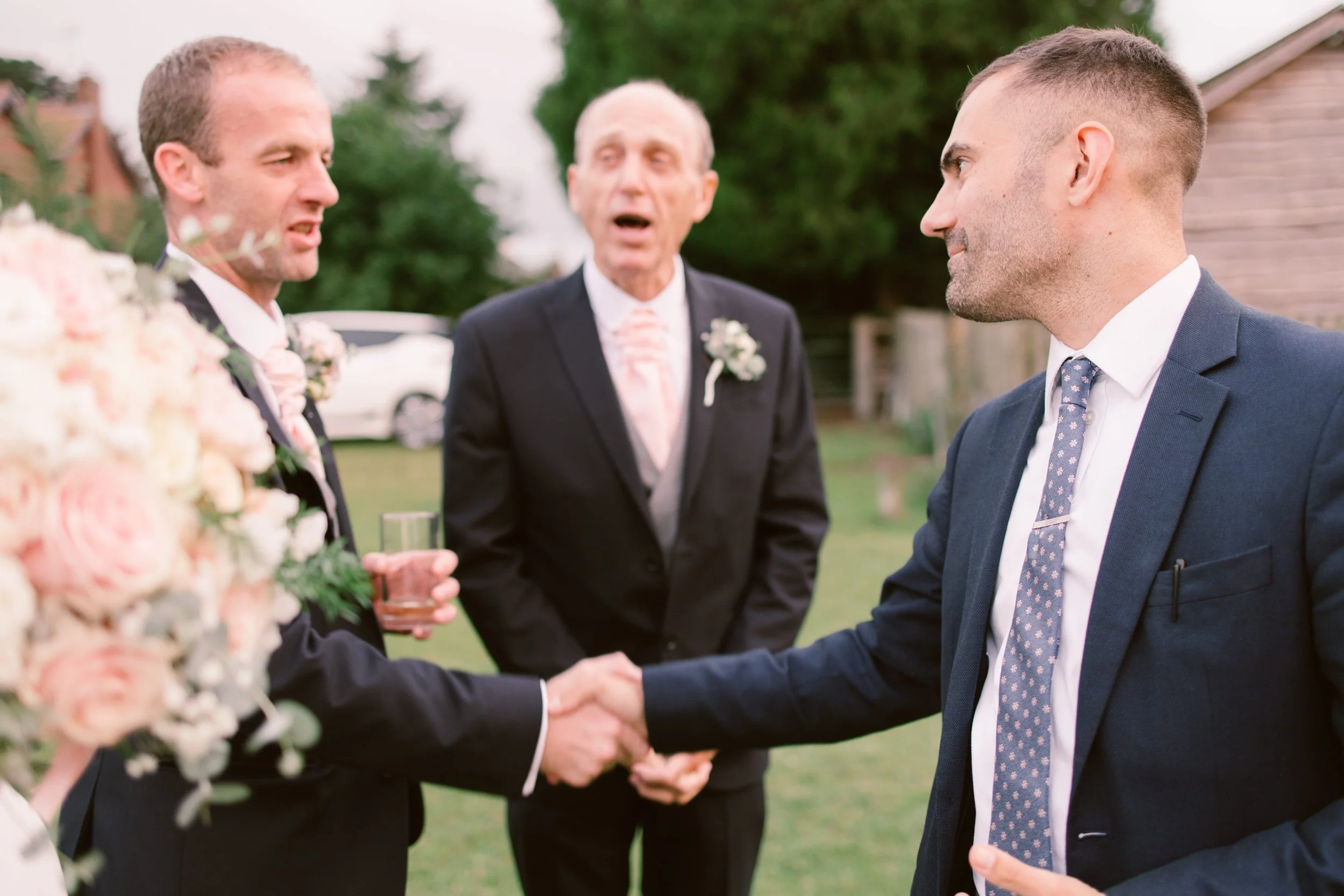
A relaxed drinks reception moment on the lawn as the host shakes hands with the groom, reflecting a warm, professional presence and the personal connection that supports a smooth and well-guided wedding day. Image courtesy of Lucy Lou Photography.
Why Hosting Matters More Than You Think
The moments between the big moments are where weddings either feel effortless… or slightly awkward.
Who:
• Gathers guests when photos overrun?
• Smoothly moves people into the wedding breakfast?
• Builds energy before speeches?
• Keeps the atmosphere relaxed but focused?
Venues manage logistics.
But someone needs to manage flow.
You can also see how this role fits specifically into your drinks reception timeline here.
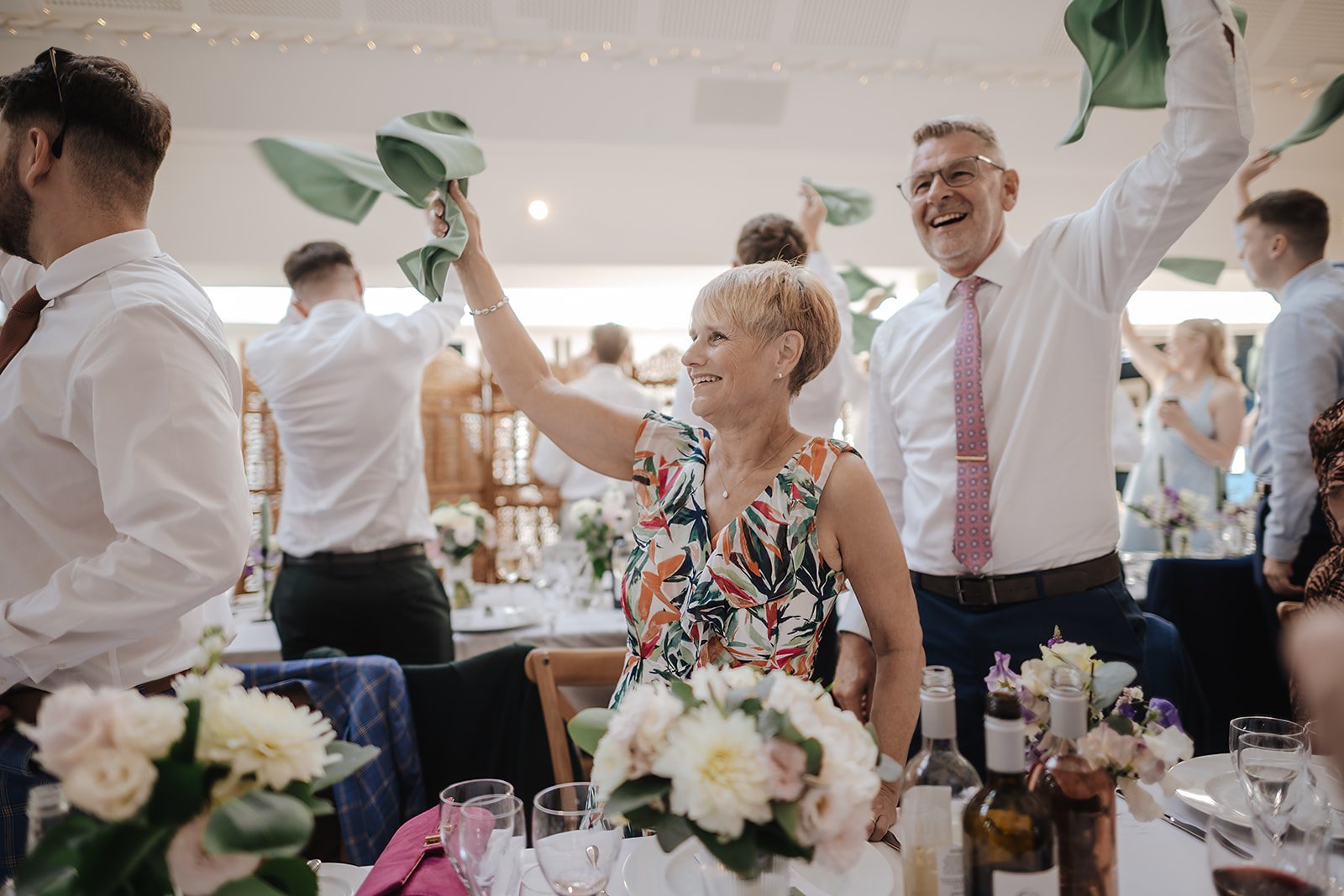
Guests stand, smile, and wave their napkins in celebration as part of the bride and groom’s grand entrance into the wedding breakfast. The joyful reaction captures the high-energy atmosphere created as the room comes together to welcome the couple. Image courtesy of Emine Weddings.
So… Do You Need a Toastmaster?
Not necessarily.
What you need is:
• Clarity
• Flow
• Communication
• Atmosphere
For some couples, that’s a traditional wedding toastmaster.
For others, it’s a more modern host who combines structure with engagement.
The important thing is alignment.
Does the style of hosting match how you want your day to feel?
Modern hosting also plays a big role in helping guests feel comfortable early on — something I explore further in how to make sure all your wedding guests feel included.
Creating a Wedding That Feels Natural and Seamless
If you’d like your day to feel relaxed, inclusive and well-guided — without overly formal announcements — modern hosting may be the right fit.
And if it feels right for your day, you’re very welcome to explore how the Wedding Magical Host experience works, read what other couples have shared, or simply get in touch to talk through your plans.
No pressure.
Just clarity.